A useful starting point
Begin with your wrist circumference, then check the measurement used for the specific bracelet. A flexible chain’s length, a rigid bangle’s inner diameter and a cuff’s opening describe different things and cannot be treated as interchangeable sizes.
Start with a useful wrist measurement
Wrap a flexible measuring tape around the place where you normally wear a bracelet. Keep it comfortably against the skin without pulling tight and note the circumference in centimetres. If you use paper instead, mark the overlap and measure the strip against a ruler.
Repeat the measurement to check your reading. Keep the wrist measurement separate from the bracelet length you prefer. Do not add an unexplained allowance and then forget which number you recorded.
The construction changes the question
Compare like with like. A flexible chain can be opened around the wrist; a closed rigid bangle has to pass over the hand. A cuff has an opening, but that does not mean it is designed to be bent.
| Style | Details to request | Important distinction |
|---|---|---|
| Chain bracelet | Full length, clasp and adjustment range | Nominal length may differ from internal wearing space |
| Closed bangle | Inner diameter or internal circumference | It must also pass over the hand |
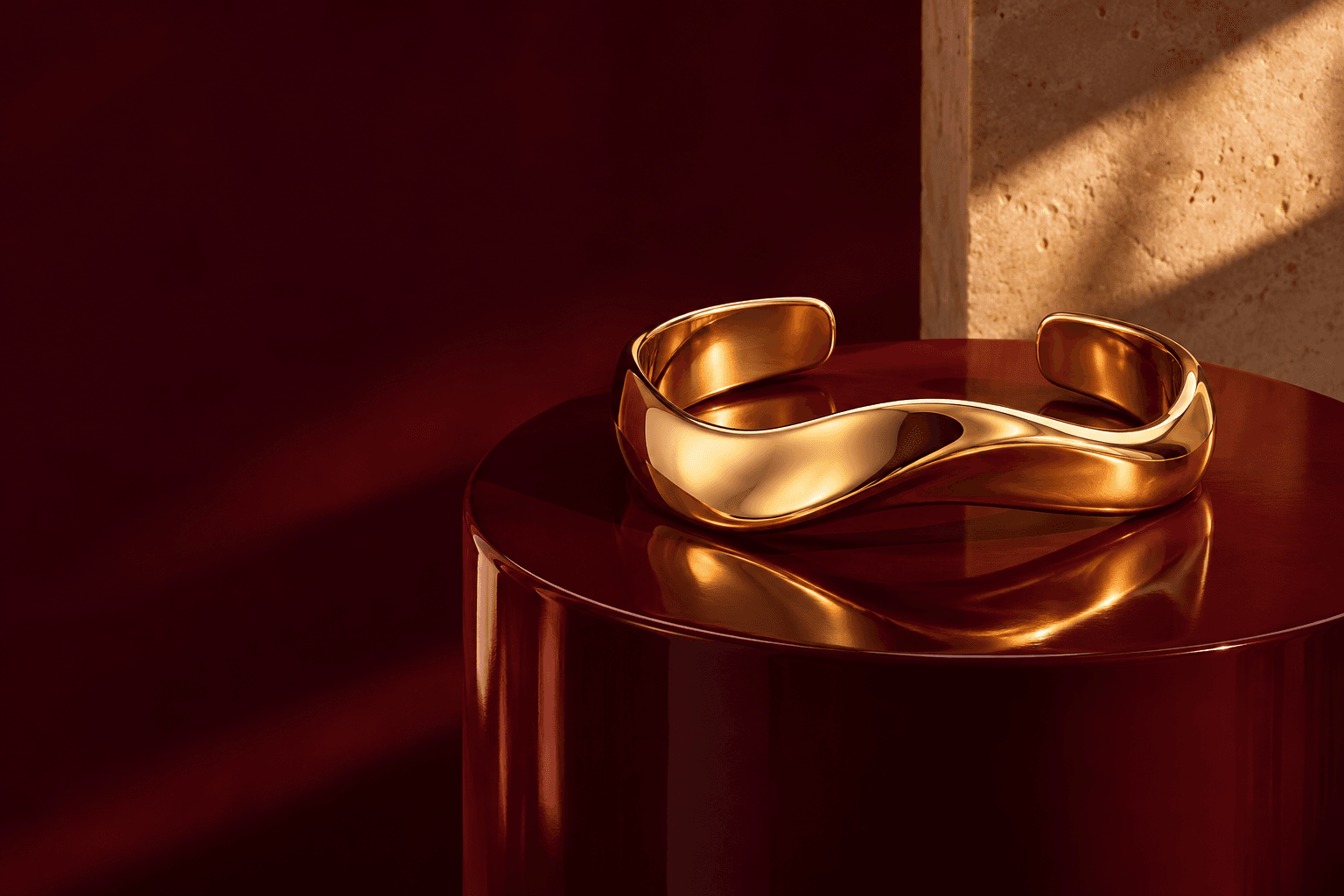
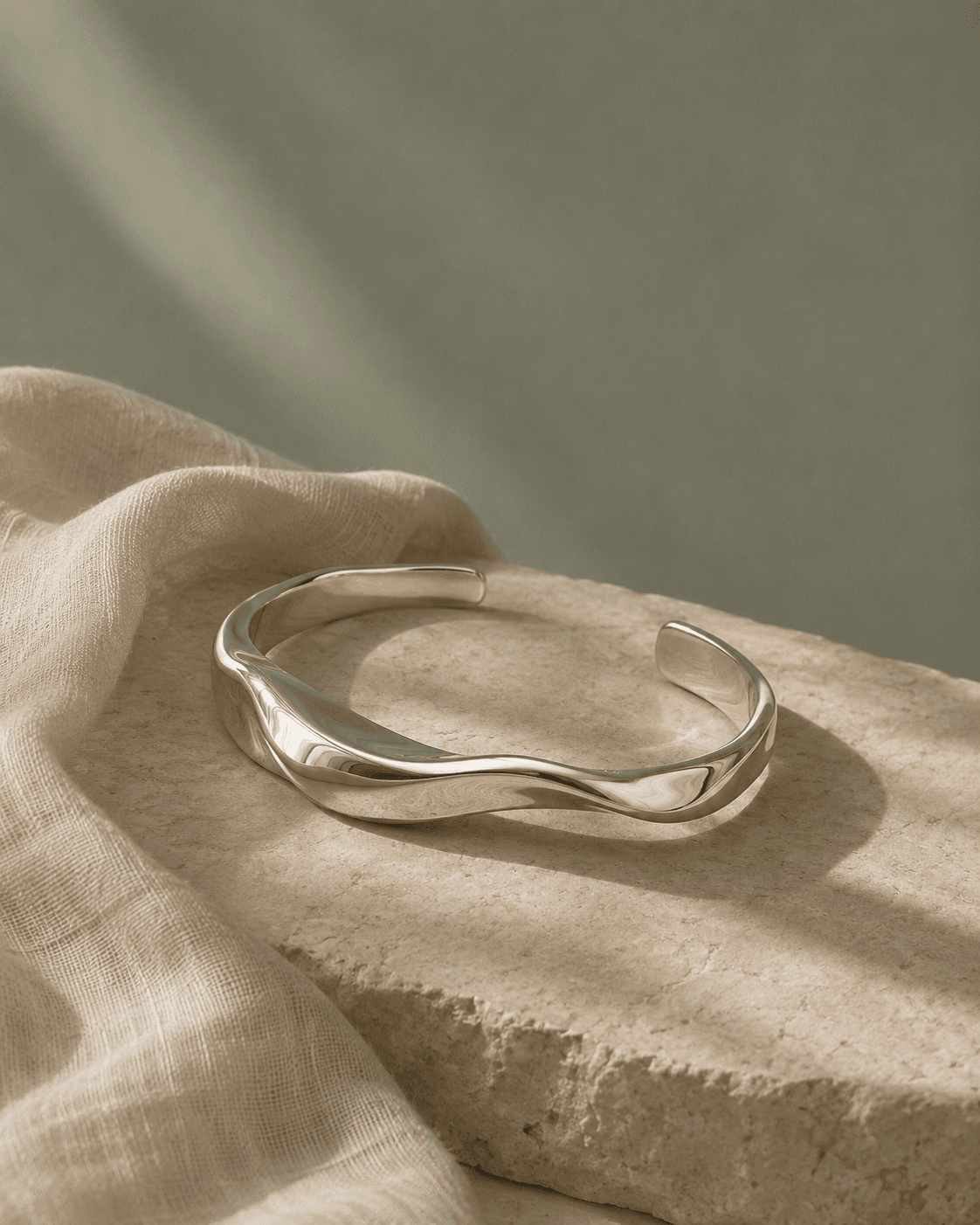
| Open cuff | Internal dimensions and opening width | Adjustability must be explicitly confirmed |
| Bracelet stack | Dimensions of every piece | Test movement and contact between pieces together |
Use a bracelet you already like
For a flexible chain, lay it flat without stretching it and record the end-to-end measurement and closure. For a rigid piece, measure the internal dimensions across the opening. If the shape is oval, note both directions rather than only one.
A familiar bracelet is a practical reference when its construction is similar to the one you are considering. It does not prove the fit of a very different link width, clasp or rigid shape. Ask the seller which measurement best matches their size chart.
Leave room for your actual routine
Compare the bracelet while moving your wrist, resting your hand on a desk and wearing a sleeve. Decide whether you prefer a close or looser feel. There is no single extra-length number that works for every construction and preference.
If you plan to wear a watch or another bracelet beside it, check their contact points. Avoid forcing a cuff wider or squeezing it smaller unless the maker specifically describes that adjustment as appropriate.
Record the question before the purchase
A helpful message to a seller is specific: “My wrist circumference is __ cm. The bracelet I like measures __ cm using this method. Which dimensions and adjustment range does this style have?” Add the product reference so the answer concerns the correct piece.
For a gift, confirm the wearer’s existing bracelet and the seller’s exchange policy where possible. OVE’s visual studies do not provide real product measurements; actual sizes will accompany the verified collection.
A little more clarity
Your questions, considered.
Can I choose a bangle using wrist size alone?
No. A closed bangle also has to pass over the hand. Check the maker’s sizing method and the bangle’s internal dimensions.
Are all cuffs adjustable?
No. An opening does not establish adjustability. Follow the maker’s instructions and never force the shape.
About these notes
Prepared for OVE JEWELRY with AI-assisted research and writing. These are general styling and buying notes, not a report of product testing. Editorial images are AI-generated concepts. The OVE collection is not yet available to order.
Our editorial approach