A useful starting point
Choose a lead necklace, add a second at a visibly different length and check the arrangement with the neckline you plan to wear. Compare the full chain lengths and pendant drop rather than assuming every layered look is a matching set.
Begin with your neckline
A necklace is part of the outfit around it. Put on the top you want to wear before arranging the layers. Compare a shorter chain with the edge of the fabric, then decide whether the second piece should sit inside that outline or extend beyond it.
Choose the piece you want to notice first. This might be a pendant or a more visible chain. Let the other layer support it. If two pendants appear crowded together, try wearing one on another day rather than adding more length to solve every conflict.
Create separation, then try it on
Different chain lengths create potential separation, but the way they sit also depends on the wearer and the pendant. Tiffany’s necklace size guide describes checking a proposed length with a piece of string. Use that as a personal fit check, not as a substitute for the measurements of the actual necklace.
The planner below compares lengths only. For example, 16, 18 and 20 inches leave two-inch differences in total chain length. Those differences are not the vertical gaps you will see on your body. Adjust your choices after trying them against your own neckline.
Give each layer a role
A simple three-part exercise is line, texture and focal point: one quiet chain, one visually different chain and one pendant. You do not have to use all three. Two pieces may communicate your style more clearly.
If you enjoy mixing colours, repeat a colour deliberately rather than trying to make every piece match. Try the arrangement in daylight. A photograph can help you compare proportions, but it cannot establish metal content or surface quality.
Make room for everyday movement
Check the arrangement while sitting, walking and putting on a jacket. If the chains repeatedly cross, simplify the combination and check their closures and adjustment points. A pleasing length difference is not a guarantee against tangling.
Fasten and store separate chains individually. Before adding a connector or extender, confirm that it suits the construction and closure of the actual pieces. Do not pull on a knot or alter a clasp simply to recreate an image.
A layered picture is not always a set
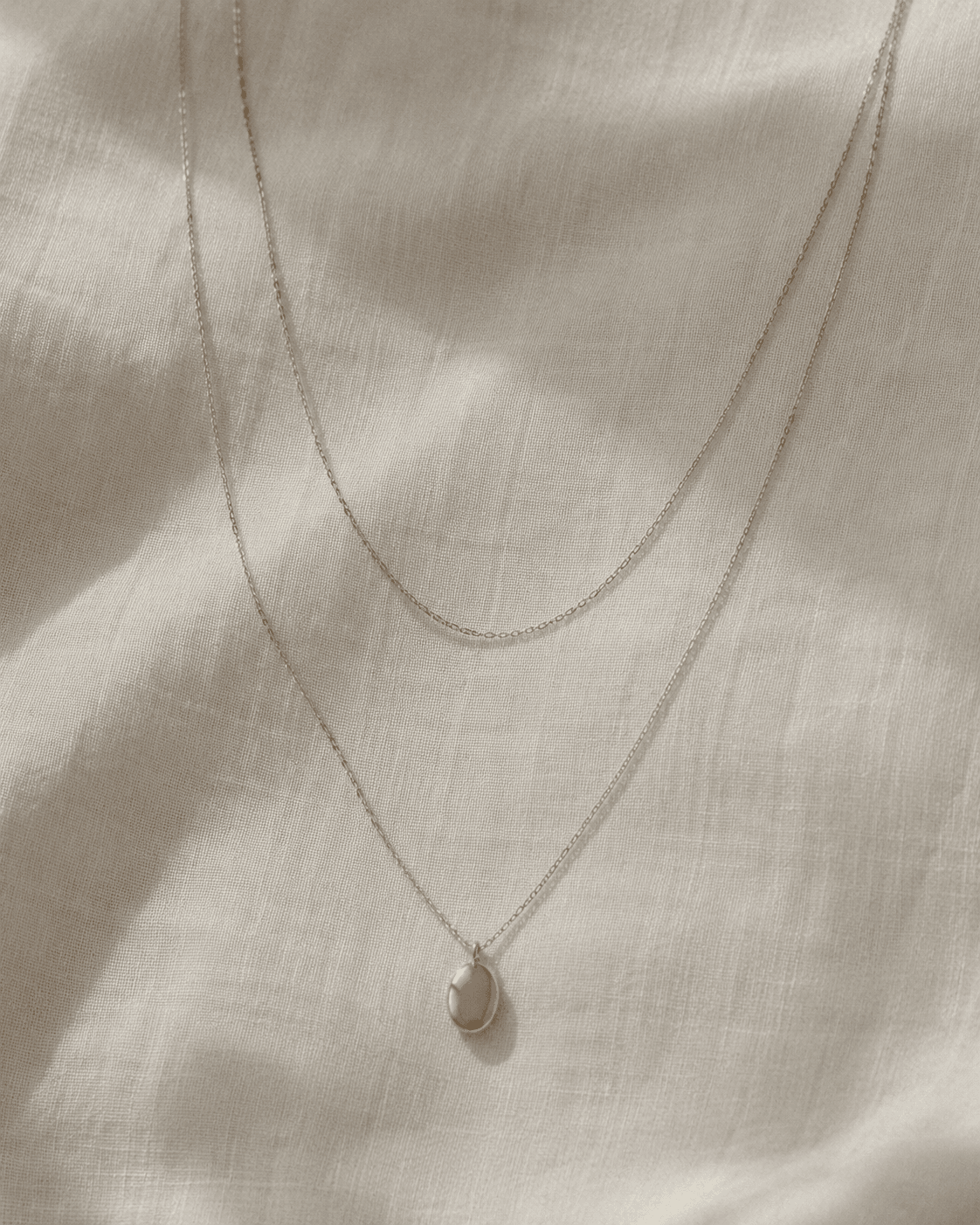
A product image may show several necklaces even when the listing sells only one. Read the included-item list, each chain length and the pendant measurements. Ask whether the shortest stated length includes an extender or whether that is additional.
- Number of necklaces included in the price
- Full length and usable adjustment range of each chain
- Pendant height, including any connecting loop
- Closure type and any detachable parts
- Material, finish and the care instructions for each piece
Try a few proportions
Your layering notebook.
Compare chain lengths before you try the pieces on.
Your total-length differences
2 in between layers 1 and 2 · 2 in between layers 2 and 3
Schematic only. Total-length differences are not vertical gaps on the body. Pendant size, chain construction and your proportions affect placement. 1 inch = 2.54 cm.
A little more clarity
Your questions, considered.
What lengths should I layer?
Start by comparing two lengths that you already know work with your clothes. The 16/18/20-inch planner examples show spacing options, not a universal fit recommendation.
Will different lengths stop necklaces tangling?
They may change the arrangement, but do not guarantee tangle-free wear. Construction, movement, closures and the combination itself all matter.
About these notes
Prepared for OVE JEWELRY with AI-assisted research and writing. These are general styling and buying notes, not a report of product testing. Editorial images are AI-generated concepts. The OVE collection is not yet available to order.
Further reading
Sources consulted November 2, 2026. References provide general information and do not imply endorsement of OVE.
Our editorial approach