A useful starting point
Read a jewelry description in three parts: the underlying material, any surface layer and the construction of the piece. “Gold-coloured” describes appearance; it does not establish gold content. Ask for the missing details before comparing prices or care requirements.
Separate appearance from construction
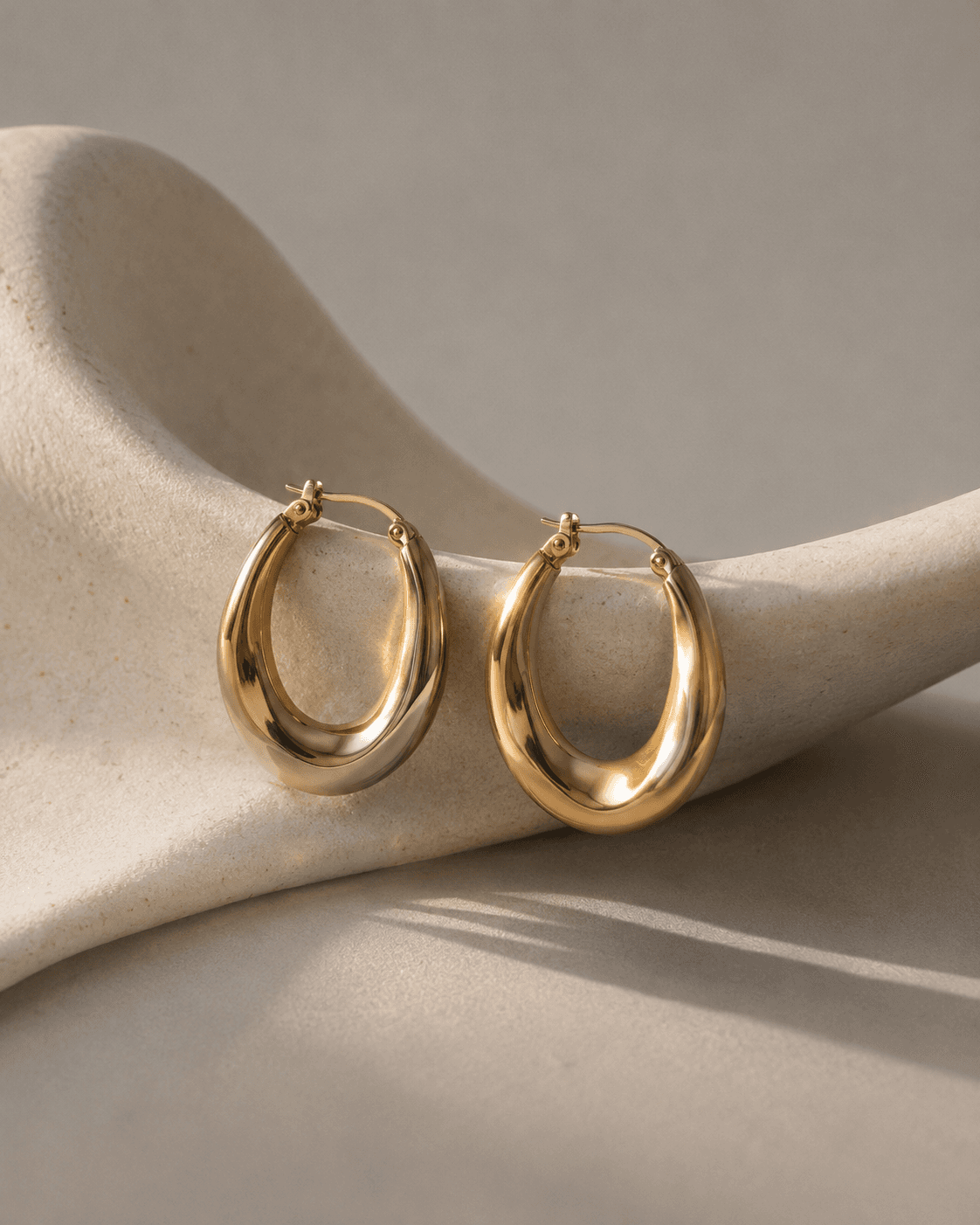
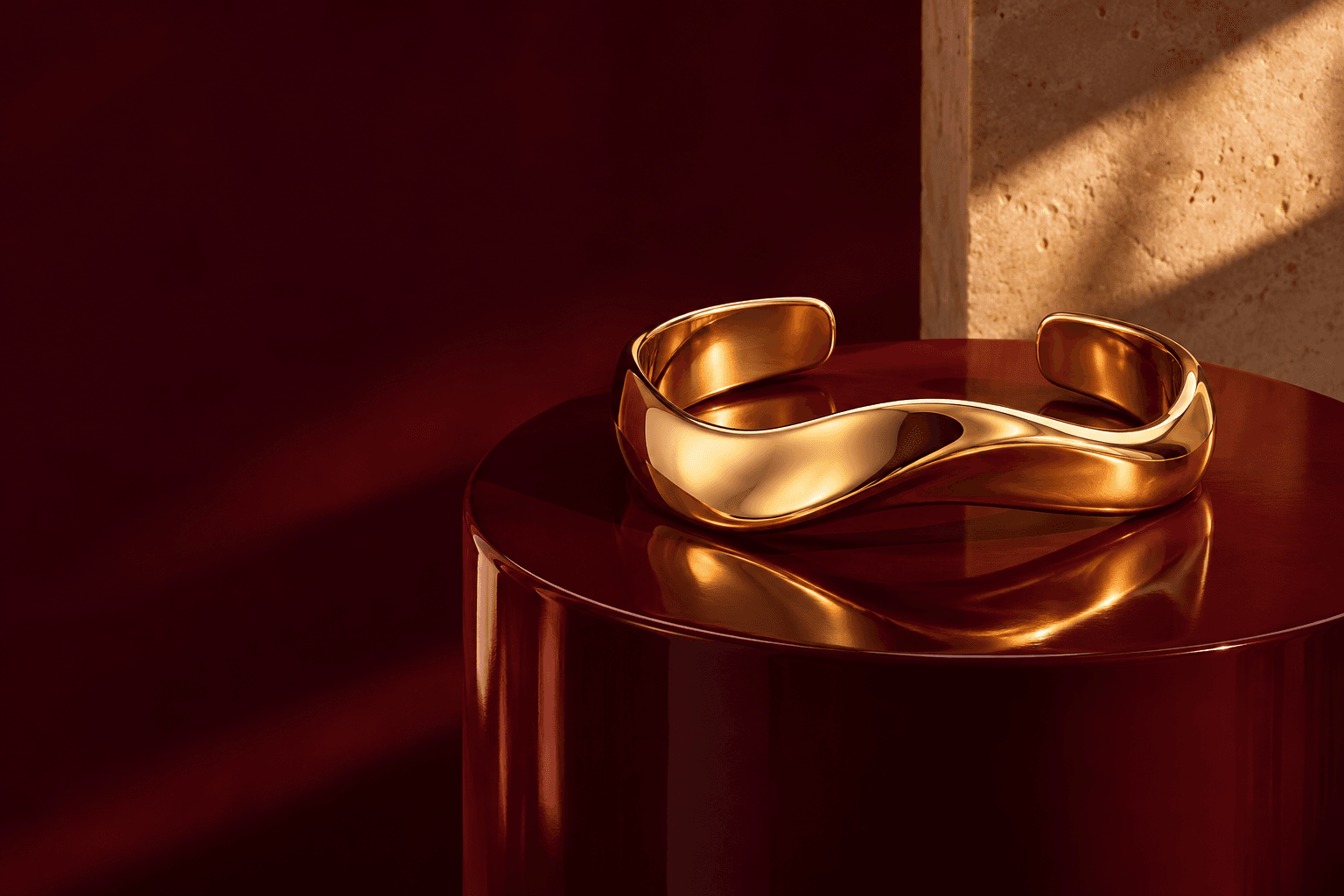
A photograph is useful for comparing silhouettes and colour, but it cannot tell you the composition of a metal or the thickness of a coating. Keep those questions separate from the question of whether you like the design.
A useful comparison note has three lines: base material, surface finish and components. Record the description for the chain, pendant, post and clasp when they differ. An attractive colour name should not replace those details.
Read the material terms carefully
The following short definitions summarise the US Federal Trade Commission’s consumer guidance. They describe terminology, not a test of any OVE item or legal guidance for selling in every country.
| Term | What to understand | A useful follow-up |
|---|---|---|
| Karat gold | The karat number expresses gold content out of 24 parts. | What is the stated karat and who stands behind the description? |
| Sterling silver | Sterling describes 92.5% silver; 925 is a common mark. | What are the other components and any surface finish? |
| Gold plated | Gold forms a surface layer; wear depends on use and layer thickness. | What is the base metal and what coating specification is supplied? |
| Vermeil | A gold-plated product with a sterling-silver base. | What are the complete base and coating specifications? |
| Gold-coloured or silver-coloured | A colour description alone does not identify metal content. | What material creates the appearance? |
Build a like-for-like comparison
When two pieces look similar, make a small comparison sheet. Put dimensions and weight alongside material details, then add what comes in the package and the seller’s care instructions. This is more informative than placing photographs next to a single price.
If a description says only “premium metal” or “luxury finish”, ask for a specific explanation. Leave the field blank until it is answered. A missing field is an unanswered question, not proof that a product is good or bad.
Treat performance claims as separate questions
Water resistance, tarnish resistance, nickel content and skin-sensitivity statements are different claims. None follows automatically from a colour, a style name or a concept photograph. Ask what the seller’s statement applies to and what evidence supports it.
This guide does not recommend a material for a medical condition. If you have a known sensitivity, use the exact product composition and appropriate professional advice rather than a broad marketing label. OVE does not currently make tested skin-sensitivity or waterproof claims.
Keep the facts with the piece
Save the product reference and material description with the care instructions. If you are buying for someone else, pass those details on with the gift. A future cleaning decision is easier when you know what was actually purchased.
- Base material and component differences
- Coating or finish description, if applicable
- Dimensions, construction and closure
- Care instructions and exclusions
- Seller contact and written purchase terms
A little more clarity
Your questions, considered.
Does a gold finish mean the whole piece is gold?
No. Ask whether the description refers to the base material or a surface layer, and request the complete specification.
Do the OVE concept images establish materials?
No. They are AI-generated visual studies. Materials and product evidence will be supplied with the actual collection.
About these notes
Prepared for OVE JEWELRY with AI-assisted research and writing. These are general styling and buying notes, not a report of product testing. Editorial images are AI-generated concepts. The OVE collection is not yet available to order.
Further reading
Sources consulted November 2, 2026. References provide general information and do not imply endorsement of OVE.
Our editorial approach